Why Choosing the Right Fractional CMO Matters More Than Choosing One
By Michael Donovan ·
For established companies in environmental remediation, heavy industry and technology, hiring fractional marketing leadership can make excellent business sense. But there’s an important distinction between someone who can develop a strategy and someone who can actually bring it to life.
The fractional CMO model has become increasingly attractive to businesses that need experienced marketing leadership but don’t necessarily require another full-time executive.
The economics are straightforward. A company can access senior-level strategic expertise without assuming the salary, benefits and long-term commitments associated with a permanent C-suite appointment.
For a growing industrial company generating $10 million to $200 million in annual revenue, that can be a compelling proposition.
But there’s something missing from much of the conversation about fractional marketing leadership.
Not all fractional CMOs deliver the same kind of value. And the difference can be substantial.
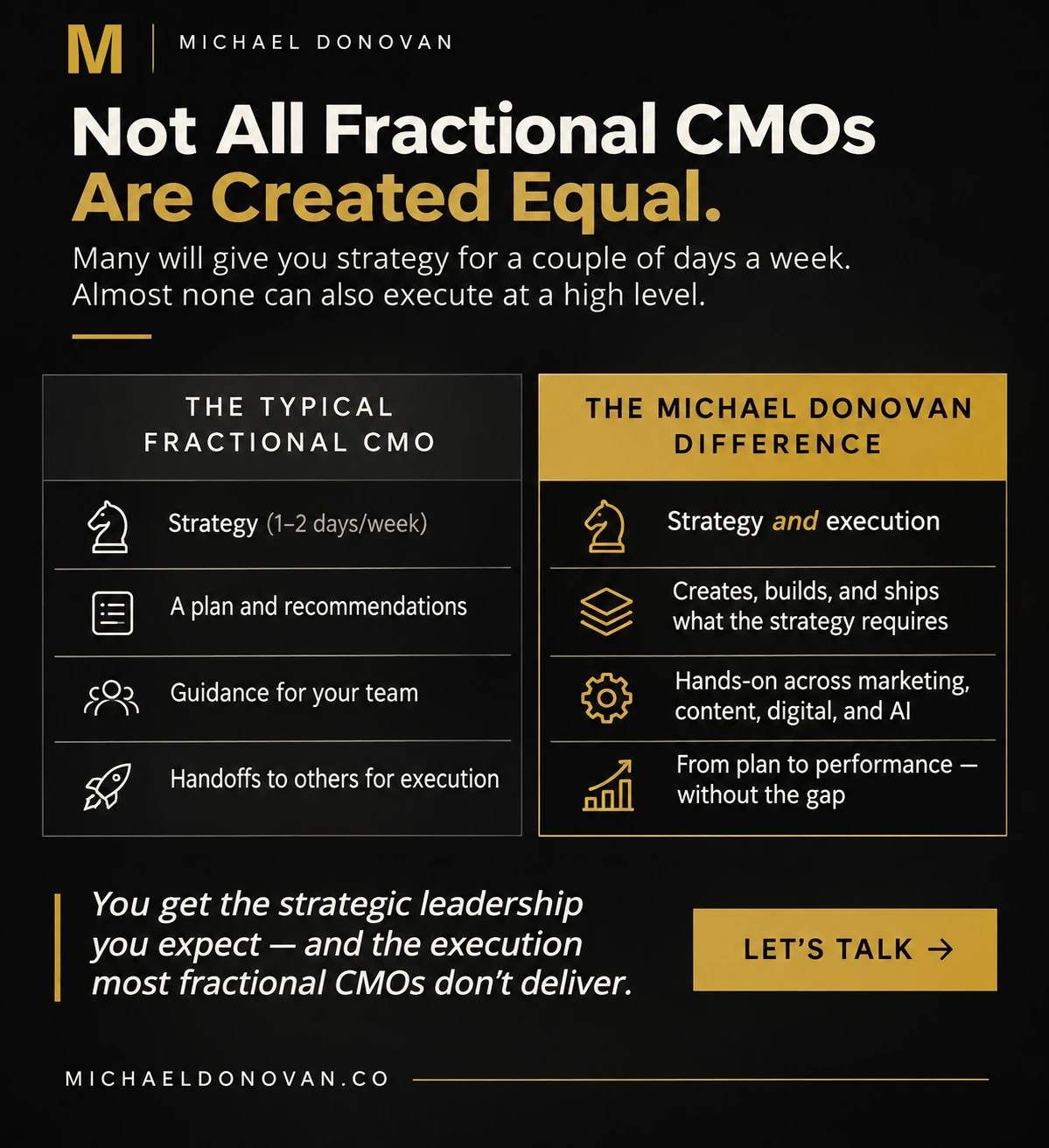
Some are exceptional strategists. They assess the business, identify opportunities, establish priorities and develop plans for others to execute.
Others bring operational leadership. They manage internal teams, oversee agencies and coordinate implementation.
A smaller group can do something considerably more valuable for certain organizations.
They can develop the strategy and execute it themselves.
That distinction deserves far more attention than it receives.
The Strategy Is Only the Beginning
Consider a typical fractional CMO engagement.
An experienced executive joins a company for one or two days a week. They review its market position, evaluate competitors and identify opportunities to strengthen its brand and improve commercial performance.
They might recommend a new positioning strategy, a website overhaul, a content marketing program or a more sophisticated approach to sales enablement.
All worthwhile initiatives.
But then comes the question that determines whether any of it will make a difference.
Who’s going to do the work?
Who writes the content? Who develops the website? Who produces the sales materials? Who creates the campaigns and builds the digital systems needed to support them?
In a large organization, those responsibilities may already belong to an established marketing department.
In many mid-market industrial companies, however, that department barely exists.
There may be a marketing coordinator, an administrative employee handling communications or an external agency responsible for maintaining the website.
What the company often lacks is the depth of specialist expertise needed to translate an ambitious strategy into effective execution.
The fractional CMO has identified the destination.
But the organization still needs someone capable of getting it there.
The Hidden Cost of Strategy Without Execution
This is where the economics of fractional marketing leadership become more complicated.
Imagine an environmental remediation company engaging a fractional CMO for $12,000 a month.
The executive develops a sound marketing strategy and establishes a clear plan for improving the company’s market visibility.
But implementing that strategy requires additional resources.
A copywriter is needed to develop technical content. A designer must produce sales collateral. A web developer is required to improve the company’s digital presence. An SEO specialist is brought in to strengthen search performance.
Suddenly, the original retainer is only one component of a much larger investment.
There’s nothing inherently wrong with this arrangement. In fact, for companies with established marketing teams and sufficient budgets, it may be the most effective approach.
But for organizations seeking both strategic direction and measurable progress, the distinction matters.
Are you hiring someone to tell you what needs to happen, or someone who can make it happen?
The answer has implications for cost, speed and accountability.
Why This Matters in Industrial Markets
I’ve spent more than 25 years working in branding, marketing and communications, including extensive experience with technically sophisticated businesses.
One observation has remained remarkably consistent.
Many industrial companies are far more sophisticated operationally than they are commercially.
They may employ outstanding engineers and technical specialists. They may have developed proprietary technologies or delivered complex projects worth tens of millions of dollars.
Yet their marketing capabilities often remain surprisingly modest.
Their websites struggle to communicate the value of their expertise. Their sales materials emphasize technical specifications without adequately addressing customer concerns. Their market positioning fails to distinguish them from competitors.
Sometimes the company’s most valuable knowledge resides almost entirely in the heads of its senior executives.
These businesses don’t necessarily lack marketing activity.
They lack the ability to turn their expertise into a compelling commercial advantage.
And solving that problem requires more than a strategy document.
It requires someone who understands how to translate complex technical capabilities into persuasive communications, then develop the materials and systems that bring that positioning into the market.
The Difference Between Knowing What Good Looks Like and Being Able to Produce It
There’s a distinction I’ve always considered important in marketing leadership.
Knowing what constitutes exceptional creative work isn’t the same as being able to create it.
A marketing executive may recognize excellent writing without being an accomplished writer.
They may understand the importance of effective design without possessing the skills to produce it.
They may appreciate the commercial potential of artificial intelligence without knowing how to develop or implement an AI-enabled business application.
These limitations don’t necessarily make someone a poor CMO.
The ability to lead specialists is itself a valuable executive capability.
But it does mean the organization must have access to those specialists.
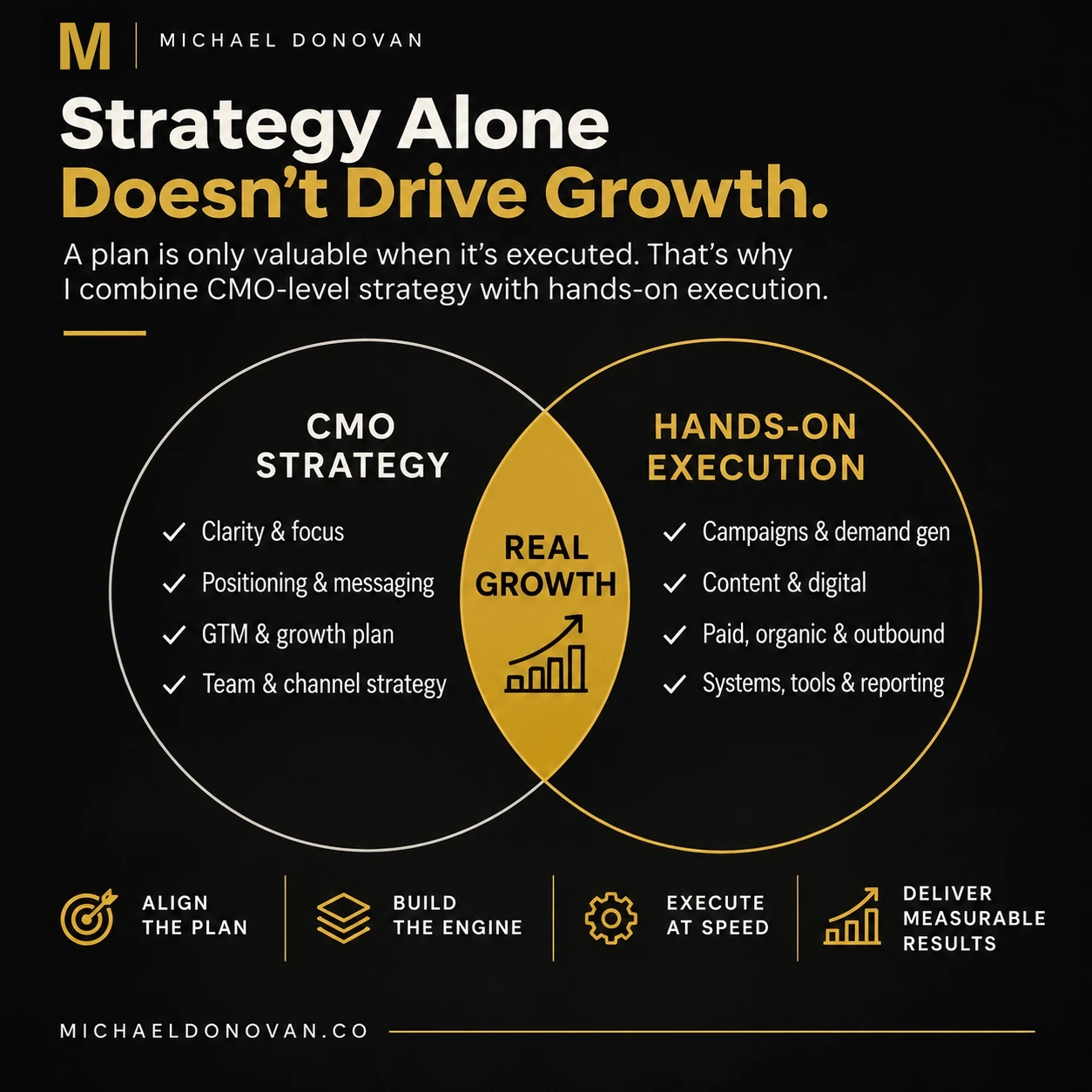
For companies without extensive marketing departments, a fractional executive who also possesses advanced execution capabilities can offer a different operating model.
Strategy and implementation become more closely connected.
Ideas can move from concept to production without passing through multiple layers of interpretation.
And the person responsible for establishing the strategic direction remains directly involved in the quality of the work that reaches the market.
There is considerable value in eliminating the distance between strategic thinking and practical execution.
A New Dimension: Marketing Leadership and AI Development
Artificial intelligence has introduced another important distinction between fractional marketing executives.
Most experienced CMOs now recognize that AI is changing how businesses research markets, develop content and manage commercial relationships.
But recognizing its potential and building useful applications are two different things.
For technically sophisticated companies, the opportunity extends well beyond using generative AI to produce marketing content.
AI can support the development of commercial intelligence systems that monitor market activity, identify emerging opportunities and help sales teams understand prospective customers.
It can improve how organizations gather competitive intelligence, interpret procurement information and identify signals of future demand.
It can also make specialized technical knowledge more accessible to prospective customers.
These capabilities are particularly relevant in environmental remediation and industrial markets, where buying decisions are complex and opportunities often develop over extended periods.
A fractional CMO who can identify these opportunities is valuable.
One who can help architect and build the systems that deliver them offers an additional level of capability.
And that distinction will become increasingly important as marketing technology moves beyond conventional software platforms toward more specialized, AI-enabled commercial infrastructure.
The Right Fractional CMO Depends on What Your Business Actually Needs
None of this means every company should seek a fractional CMO who personally executes every aspect of its marketing program.
That would be neither realistic nor desirable.
A business with an established marketing department may benefit most from an experienced strategist who can provide direction and leadership.
A company undertaking a major transformation may require someone capable of restructuring its marketing operations and managing a substantial team.
But an established industrial business with limited internal marketing resources faces a different challenge.
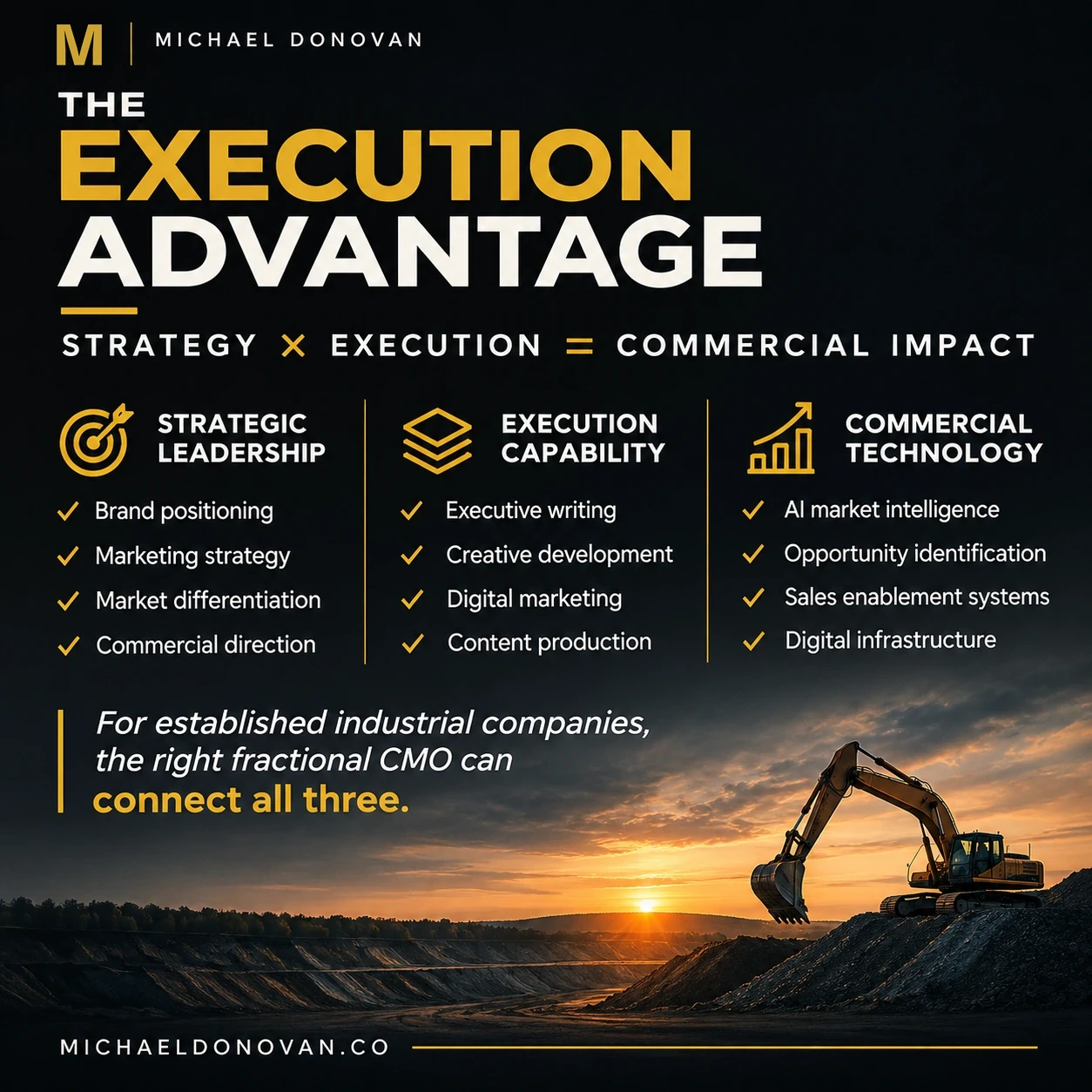
It needs someone who can determine what should be done while possessing the practical expertise to ensure the work is completed to a high standard.
That might include developing brand positioning and writing executive communications.
It might involve creating technically sophisticated sales materials or rebuilding the company’s digital presence.
Increasingly, it may also involve developing the commercial intelligence systems that help connect marketing activity with business development.
The ideal executive isn’t necessarily someone who performs every task personally.
It’s someone whose capabilities extend far enough into execution that the company isn’t entirely dependent on additional suppliers to make progress.
Five Questions Worth Asking Before Hiring a Fractional CMO
For CEOs and business owners considering fractional marketing leadership, I’d suggest looking beyond the candidate’s strategic credentials.
1. Can they demonstrate work they’ve personally produced?
Ask to see examples of writing, brand development, campaigns or digital initiatives they directly created, rather than simply supervised.
2. What happens after the strategy is approved?
Establish who will be responsible for implementation and what additional resources the company will need.
3. Do they understand how your customers make purchasing decisions?
Industrial purchasing decisions rarely resemble consumer transactions. Technical evaluation, procurement requirements and commercial risk can all influence the process.
4. Can they connect marketing to commercial performance?
The objective should extend beyond producing attractive materials or generating website traffic. Marketing should help strengthen market position and support the development of qualified business opportunities.
5. Can they bring new capabilities into the business?
This might involve digital infrastructure, market intelligence or AI-enabled applications that improve how the company identifies opportunities and supports its sales organization.
The answers will tell you considerably more than the candidate’s title.
The Real Value of Fractional Leadership
The attraction of fractional executive leadership has always been access.
Companies can engage experienced professionals whose expertise might otherwise be difficult to justify on a full-time basis.
But access to expertise is only part of the equation.
For many established businesses, particularly those operating in complex industrial markets, the greater opportunity lies in finding someone who can combine executive judgment with exceptional practical capability.
Someone who understands the business well enough to develop the right strategy.
And who possesses the skills to turn that strategy into something tangible.
A stronger brand. More persuasive communications. Better sales tools. More sophisticated commercial systems.
Ultimately, a more competitive business.
Because while a good strategy can point a company in the right direction, its value is only realized when someone has the ability to bring it to life.
And when you’re choosing a fractional CMO, that may be the most important distinction of all.
⸻
Michael Donovan is a fractional Chief Marketing Officer and brand strategist with more than 25 years of experience in marketing, branding and communications. His work combines executive marketing leadership with hands-on creative development and AI-enabled commercial technology, serving businesses in environmental remediation, heavy industry and technology.
MichaelDonovan.co
Fractional CMO Services & Scope
Don't Hire a CMO to Manage Your Marketing. Hire One to Improve Your Business.